
It is a common experience: a sudden muscle ache or joint stiffness leads you to reach for a quick-fix cooling spray. For a few minutes, the sharp sensation of menthol provides a distracting chill, but as the vapor evaporates, the underlying discomfort often remains unchanged.
This cycle of temporary relief followed by the return of pain is not a failure of your body, but rather a limitation of delivery systems. To understand why certain applications provide lasting comfort while others offer only a momentary mask, we must look at the biological interface between the skin and the circulatory system.
The Clinical Reality of Transdermal Delivery
Modern pharmacology increasingly recognizes that the skin is not merely a barrier, but a complex organ capable of metabolizing and transporting therapeutic compounds. However, the efficiency of this transport—known as transdermal absorption—depends heavily on the “carrier” used.
Systematic reviews in journals such as the Journal of Controlled Release highlight that for an active ingredient to reach deep tissue, it must bypass the stratum corneum (the outermost layer of the skin).
- Sprays: Often utilize alcohol or volatile aerosols. These evaporate rapidly, leaving the active ingredients sitting on the surface of the skin rather than penetrating it.
- Oils: Act as “permeation enhancers.” Lipophilic (fat-soluble) molecules in traditional oils mirror the skin’s own lipid structure, allowing for deeper, sustained delivery of botanical compounds.
The Mechanism: How Oils Interact with Physiology
To understand why oils are often more effective for long-term management, we must examine the Pharmacokinetics of topical application.
1. The Lipid Compatibility Factor
The human skin barrier is composed of fats. Because oil is also a lipid, it creates a “bridge” that allows medicinal molecules to slide through the cellular gaps. Alcohol-based sprays, conversely, can dehydrate the skin cells, causing them to tighten and effectively “lock out” the very medicine you are trying to apply.
2. Vasodilation and Thermal Regulation
Traditional Ayurvedic oils are often processed with herbs that induce mild vasodilation (the widening of blood vessels). This increases local blood flow to the site of application. When blood flow increases, the rate of removal of metabolic waste—such as lactic acid—accelerates, addressing the root of the soreness rather than just the sensation.
3. Sustained Release vs. Flash Evaporation
A spray provides a “spike” of sensation. An oil provides a “reservoir.” Once massaged into the skin, the oil remains in the dermal layers, releasing active compounds into the underlying tissues over several hours.
Comparative Breakdown: Sprays vs. Medicated Oils
| Feature | Aerosol Sprays | Medicated Oils (Taila) |
| Primary Action | Evaporative Cooling | Deep Tissue Penetration |
| Duration | 15–30 Minutes | 4–6 Hours |
| Skin Impact | Can be drying/irritating | Nourishing and lubricating |
| Mechanism | Sensory distraction (Gate Control Theory) | Anti-inflammatory absorption |
| Best For | Acute, superficial stings | Chronic aches, stiffness, recovery |
The Application Layer: Maximizing Efficacy
To achieve the best results with oil-based topicals, the method of application is as significant as the ingredients themselves.
- Preparation: Apply to clean skin. Warmth increases permeability; applying oil after a warm shower or using a warm compress can improve absorption rates by up to 20-30%.
- Dosage: For localized joint issues, 3–5ml of oil is generally sufficient.
- Technique: Use gentle, circular motions over joints and long strokes over muscles. This physical friction assists the molecules in bypassing the skin barrier.
- Consistency: Unlike “emergency” sprays, oils work cumulatively. In clinical observations of botanical topicals, significant markers of reduced inflammation are typically noted after 7 to 14 days of consistent daily use.
Managing Expectations
It is important to remain realistic about topical recovery. While a spray might provide an “instant” cold sensation, it rarely addresses structural issues. Oils are a tool for gradual management.
- 0–10 Minutes: You should feel a localized warming sensation and a reduction in skin tension.
- Day 1–3: Improved mobility in the affected area.
- Week 2: A noticeable shift in the “baseline” level of comfort during daily movements.
Reliable Options for Consideration
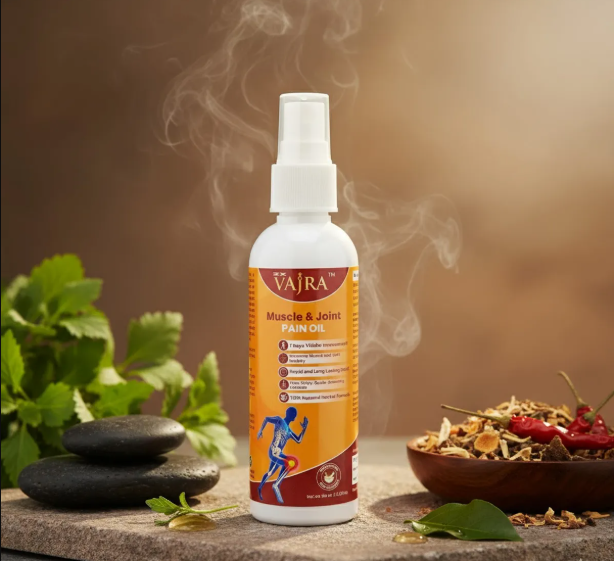
If you’re done relying on short-lived sprays that numb the surface and disappear in minutes, ZX Vajra Muscle & Joint Pain Oil is a more disciplined alternative. This isn’t a volatile, alcohol-based formula designed for instant sensation—it’s a 100% Ayurvedic oil blend built for absorption, retention, and real recovery.
Formulated with Mahanarayan Oil, Mahamesh Oil, Gandhapurna, Nilgiri, Malkangini, and other time-tested Vedic oils, the formula stays in contact with the skin long enough for the active botanicals to penetrate deeper tissues. These ingredients have traditionally been used for their anti-inflammatory, analgesic, and circulation-enhancing properties, which is why consistent use shows noticeable relief in muscle soreness, joint stiffness, and mobility within 7 days.
Instead of a quick fix, ZX Vajra supports a daily recovery routine—one that prioritizes sustained relief over momentary cooling. That’s the difference between masking pain and actually addressing it.
Frequently Asked Questions
Why does the spray feel like it’s working better initially?
Sprays often contain high concentrations of menthol or camphor, which trigger cold receptors in the skin. This “tricks” the brain into ignoring pain (the Gate Control Theory), but it does not necessarily reduce the underlying inflammation.
Will medicated oils stain my clothing?
Because quality oils like ZX Vajra are designed for absorption, most of the product should enter the skin within 5–10 minutes of massage. We recommend waiting a few minutes before dressing or using a dedicated cloth to pat away any excess.
Can I use oils for chronic conditions like arthritis?
Clinical evidence suggests that regular massage with medicated oils can support joint lubrication and reduce stiffness. However, oils should be viewed as a supportive measure alongside a broader medical plan.
How often should I apply the oil?
For chronic stiffness, twice daily (morning and before bed) is standard. For post-exercise recovery, a single application immediately after a warm shower is often sufficient.