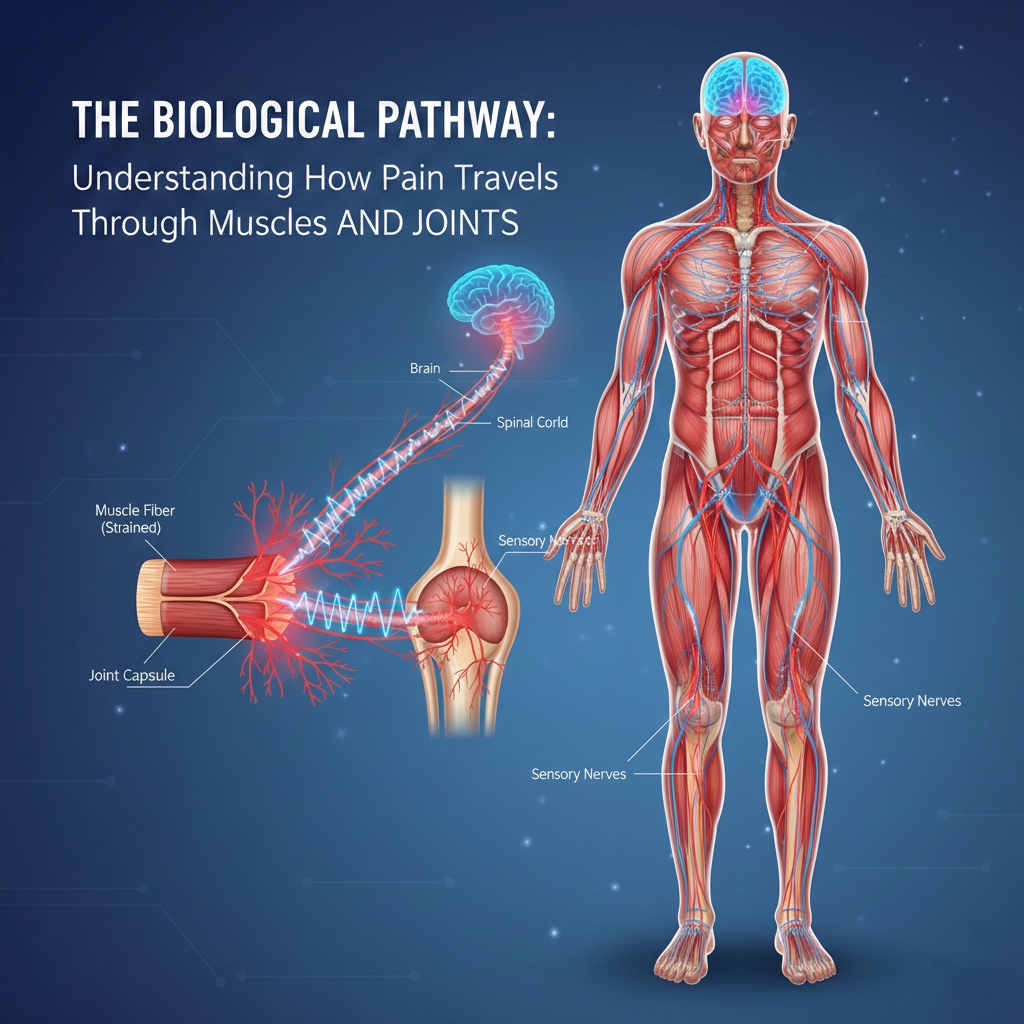
Pain is rarely a localized event; it is a sophisticated communication process. When you feel a dull ache in your lower back or a sharp twinge in a knee joint, you are experiencing the end result of a high-speed signaling chain.
Too often, we treat pain as a surface-level annoyance to be silenced. However, understanding the biological “highway” that pain travels, and the physical barriers it encounters, is the first step toward effective management. To address discomfort at its source, we must look past the skin and into the neurological and vascular pathways beneath.
The Anatomy of a Pain Signal
When tissue is stressed or injured, whether through repetitive strain, age-related wear, or acute trauma, the body initiates a three-stage process:
- Transduction: Specialized nerve endings called nociceptors detect chemical changes in the tissue, such as the release of prostaglandins (chemicals that signal distress).
- Transmission: The signal travels through the peripheral nerves to the spinal cord.
- Perception: The brain receives the signal and translates it into the sensation we recognize as “pain.”
In chronic muscle and joint issues, this system can become “sensitized.” Prostaglandins linger in the tissue, keeping the nerves in a state of constant high alert. This is why a joint can feel painful even when you aren’t moving; the chemical environment around the nerve is stuck in a loop of inflammation.
The Limitation of Sprays and Gels
Modern cooling sprays and fast-acting gels generally operate on the Gate Control Theory. By creating an intense sensation of cold (menthol), they “crowd” the nerve pathways, momentarily blocking the pain signal from reaching the brain.
While effective for temporary relief, these delivery systems face a significant hurdle: The Stratum Corneum. This is the skin’s outermost layer, designed specifically to keep foreign substances out.
- Aerosols/Sprays: Most of the active ingredient evaporates into the air or sits on the very top layer of the skin.
- Result: The “gate” is closed for 15 minutes, but the underlying inflammation and chemical distress in the deep tissue remain untouched.
Why Medicated Oils Are Biologically Superior
In traditional Ayurvedic science and modern transdermal pharmacology, oils are recognized not just as lubricants, but as permeation enhancers.
1. The Lipid Bridge
The human skin barrier is “lipophilic,” meaning it is composed of fats. Because medicated oils are also lipids, they are chemically compatible with the skin. This allows the oil to act as a vehicle, carrying botanical compounds through the cellular gaps and into the deeper dermis and muscle fibers.
2. Deep Vasodilation
Clinical evidence suggests that the act of massaging oil into a joint increases local blood circulation. Unlike sprays, which can cause blood vessels to constrict (vasoconstriction) due to the cold, warm medicated oils encourage vasodilation. This allows fresh, oxygenated blood to reach the site and helps flush out metabolic waste products like lactic acid.
3. Sustained Release
When an oil is massaged into the skin, it creates a “reservoir” effect. The active ingredients are stored in the fatty layers of the skin and released slowly into the underlying muscles and joints over several hours.
The Mechanism Breakdown: From Skin to Synovial Fluid
| Phase | Action | Physiological Result |
| 0-5 Mins | Friction and Oil Application | Breaks surface tension; opens pores. |
| 5-20 Mins | Lipid Penetration | Active botanicals pass the stratum corneum. |
| 20-60 Mins | Vascular Uptake | Ingredients enter local capillaries; reach muscle fibers. |
| 2 Hours+ | Sustained Delivery | Continuous suppression of prostaglandin production. |
Application Layer: The Correct Way to Use Oils
To ensure the pain-relief compounds reach the joint or muscle, the application must be intentional:
- Warm the Oil: Slightly warming the oil before application decreases its viscosity, allowing it to penetrate the skin’s microscopic pores more easily. (To warm, you can also, take a few drops in your palms and gently rub them together.)
- The Direction of Flow: Always massage toward the heart. This assists lymphatic drainage and helps reduce swelling around the joint.
- The “Soak” Period: After application, leave the oil on for at least 20–30 minutes before bathing. This provides the necessary time for the deep-tissue reservoir to fill.
Expectation Management: Managing the Recovery Curve
When switching from a spray to a medicated oil, it is important to adjust your timeline for relief.
- Immediate: You will not feel the “shock” of a spray, but rather a gentle, grounded warming sensation.
- 2–4 Hours: This is when the oil often outperforms sprays, as the deep-tissue penetration begins to settle the nervous system.
- 7 Days: Consistent daily application typically leads to a reduction in “morning stiffness,” as the cumulative anti-inflammatory effect takes hold.
A Reliable Option for Deep Recovery
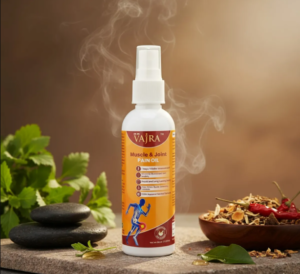
For those seeking a more profound approach to muscle and joint health, the ZX Vajra range offers a bridge between traditional wisdom and clinical efficacy.
ZX Vajra Pain Relief Oil is formulated with a base that mimics the skin’s natural lipids, ensuring that active ingredients like Mahanarayan and Gandhapura reach the deeper tissues rather than evaporating. It is designed as a facilitator for long-term joint health, offering a calm, consistent alternative to the fleeting relief of modern aerosols.
FAQ: Understanding Topical Recovery
Can I use oil on a fresh injury (like a sprain)?
For the first 24–48 hours of an acute injury, “RICE” (Rest, Ice, Compression, Elevation) is standard. Once the initial heat and swelling have subsided, moving to medicated oils can help accelerate the healing of the underlying tissue.
Why does my skin feel warm after applying pain relief oil?
This is a sign of increased blood flow (vasodilation). Botanical ingredients like cinnamon or wintergreen stimulate the micro-vessels, which helps clear out the chemical triggers of pain.
How often should I apply oil for chronic joint issues?
For chronic conditions, twice-daily application is recommended. The evening application is particularly important, as it allows the oil to work undisturbed during the body’s natural repair cycle while you sleep.